Protecting Your Barn and Shed from Destructive Rodents

Having a barn or shed on your property offers fantastic utility for storing equipment, housing livestock, and keeping supplies organized. Unfortunately, these quiet, protected structures also offer an ideal sanctuary for uninvited pests. When temperatures drop across Richmond, Virginia, local rodent populations begin searching for warm places to survive the winter.

A few mice or rats might seem like a minor nuisance initially, but an unchecked infestation can lead to serious consequences. Rodents are notorious for chewing through electrical wiring, destroying insulation, and contaminating expensive animal feed. Furthermore, they carry bacteria and viruses that pose significant health risks to both your family and your livestock.

Understanding how rodents operate is crucial for maintaining a safe and healthy environment. This comprehensive guide will help you identify early signs of a rodent problem, safely implement control methods, and structurally proof your outbuildings to keep these destructive pests away for good.
Call 804-292-0156 to Remove Rodents in the Barn in Richmond VA

Why Barns and Sheds are Rodent Magnets

To effectively control an infestation, you first need to understand why mice and rats are drawn to your outbuildings. Norway rats, roof rats, and house mice are common throughout Central Virginia, and agricultural structures provide exactly what they need to thrive.

Abundant Food Sources

Rodents are opportunistic feeders. Barns often hold bulk livestock feed, bags of seed, and hay. Sheds might store grass seed, pet food, or even nearby compost piles. When these food sources are easily accessible, mice and rats will quickly establish a permanent residence nearby.

Perfect Nesting Environments

Outbuildings are generally less frequented by humans than main residential homes, giving rodents the peace and quiet they need to reproduce. Wall voids, stacks of firewood, stored tractors, and lofted hay bales provide excellent cover. Insulation inside shed walls is easily torn apart by mice to build warm, secure nests for their young.

Get rid of rodents in Richmond today, starting with a free quote.

Identifying the Signs of an Infestation

Catching a rodent problem early can save you thousands of dollars in property damage. Since rats and mice are primarily nocturnal, you are more likely to see the evidence they leave behind than the animals themselves.

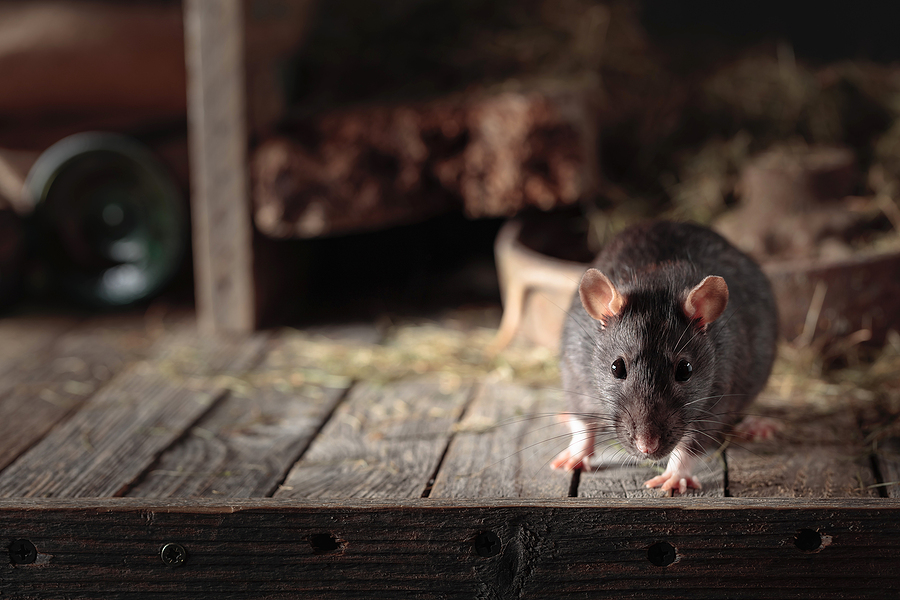
Look out for dark, pellet-shaped droppings along baseboards, near feed bins, or inside stored machinery. House mouse droppings are small and pointed, while Norway rat droppings are larger and blunt at the ends. You should also inspect wooden beams, plastic containers, and wiring for fresh gnaw marks. Rodents have teeth that never stop growing, forcing them to chew constantly. Finally, check dusty floors or dirt paths for tiny footprints and tail drag marks, which often indicate high-traffic travel routes.

Structural Proofing and Prevention

The most effective way to manage rodents is to prevent them from entering your buildings in the first place. House mice can squeeze through gaps as small as a dime, and rats can fit through holes the size of a quarter.

Start by inspecting the perimeter of your barn or shed. Seal any cracks in the foundation, gaps around pipe penetrations, and poorly fitting doors. Use materials that rodents cannot chew through, such as heavy-duty steel wool, hardware cloth, or metal flashing. Expanding foam alone is not enough, as rats will easily gnaw right through it.

Managing the exterior environment is equally important. Keep weeds trimmed low around the perimeter of your outbuildings, and move firewood or lumber piles at least 20 feet away from the structure. Inside, transfer all bagged feed, seed, and pet food into heavy-duty, chew-proof metal or thick plastic bins with tight-fitting lids.

Safe and Effective Control Methods

When an infestation is already active, you must choose a removal method that eliminates the pests without endangering your animals or family. Agricultural settings require careful consideration when placing traps or baits.

Trapping vs. Baiting

Snap traps remain one of the most reliable and safe methods for controlling small populations of rodents, especially in areas where livestock, poultry, or domestic pets are present. Placing traps inside enclosed bait stations or protective boxes ensures that only target pests can reach the trigger. Place traps along walls and near known entry points, using peanut butter or dried fruit to attract them.

Rodenticide baits can be highly effective for larger infestations, but they carry significant risks in barns and sheds. If a farm dog, barn cat, or grazing animal ingests the poison—or eats a rodent that has consumed the poison—the results can be fatal. If you must use baits, they should exclusively be placed in tamper-resistant, commercial-grade stations, secured away from any livestock areas.

Common Mistakes in DIY Rodent Control

Many property owners attempt to tackle rodent problems on their own, only to see the infestation return weeks later. Avoiding a few common missteps can drastically improve your long-term success.

Relying solely on traps without sealing entry points is a recipe for frustration. You might remove a few mice, but new ones will simply take their place. Another frequent mistake is underestimating the size of the population. A female mouse can produce up to ten litters a year. Setting just two or three traps is rarely enough to gain control. Finally, many people fail to maintain clean environments, leaving spilled grain on the floor that competes with the bait in their traps.

Frequently Asked Questions

What health risks do rodents pose in barns?

Rodents are known carriers of numerous diseases, including Leptospirosis, Hantavirus, and Salmonellosis. They spread these illnesses through their urine, feces, and saliva, which can easily contaminate livestock feed and human work surfaces.

How can I keep barn cats safe while controlling rats?

If you rely on working cats, avoid using chemical rodenticides, as cats can suffer from secondary poisoning if they eat a poisoned rat. Stick to mechanical snap traps placed inside protective boxes where your cats cannot reach them, and ensure entry points are sealed.

What is the best natural deterrent for mice in a shed?

While some people find temporary success with strong scents like peppermint oil or cayenne pepper, these are not long-term solutions. The most effective “natural” deterrent is habitat modification: removing food access, clearing clutter, and sealing structural gaps.

Maintaining a Rodent-Free Property in Richmond

A secure barn or shed requires ongoing vigilance. By regularly inspecting your structures, properly storing livestock feed, and promptly addressing any new signs of activity, you can protect your valuable property from damage. Keeping the perimeter clean and well-maintained makes your outbuildings far less appealing to local wildlife looking for a winter retreat.

If you are dealing with a severe infestation or simply want the peace of mind that comes with expert intervention, professional help is available. Our team understands the unique challenges of agricultural and storage properties in Central Virginia. Contact us today for professional rodent removal services in Richmond, Virginia, and let us help you secure your buildings for the seasons ahead.

Call Our Pros Now

Related Post: The Ultimate Guide to Rodent Control for Virginia Homeowners

Humane Wildlife Control in Charlottesville Virginia

Living in Central Virginia brings the distinct pleasure of enjoying beautiful natural landscapes right in your own backyard. From mature trees to rolling hills, the environment supports a rich diversity of wildlife. However, as residential neighborhoods expand, the natural habitats of many animals shrink. This overlap often leads to unexpected and sometimes stressful encounters with wild animals seeking food, water, and shelter in human spaces.

Finding a wild animal living in your attic or burrowing under your porch is undoubtedly alarming. Your home is your sanctuary, and property damage caused by nesting wildlife can be frustrating to manage. Yet, these animals are simply trying to survive. Approaching the situation with compassion and understanding is vital for maintaining a healthy local ecosystem.

Humane wildlife control provides a balanced solution. By focusing on ethical removal and preventative property maintenance, you can protect your home without causing unnecessary harm to the animals. Understanding the behavior of local wildlife and the specific regulations set by the Virginia Department of Wildlife Resources will help you navigate these encounters safely and legally.

Charlottesville Wildlife Control Service

Common Wildlife Issues in Charlottesville

The most frequent nuisance wildlife encounters in Charlottesville involve raccoons, squirrels, bats, and various furbearers seeking shelter and food in residential neighborhoods.

  • Squirrels are notorious for chewing through siding and making comfortable nests in warm attics.
  • Raccoons are highly intelligent and possess nimble paws, allowing them to easily unlatch garbage cans or tear off roof vents.
  • Bats frequently seek refuge under eaves, behind shutters, or inside attics, particularly species like the Big Brown Bat and the Little Brown Bat.

Homeowners also frequently encounter furbearers like red foxes, coyotes, and skunks roaming near their property. Seeing a fox or raccoon during daylight hours often causes panic because people assume the animal is sick or carrying rabies.

However, daytime activity is completely normal during the pup-rearing season from March through July. These animals must hunt longer hours during the day to find enough food to support their young. They are generally not a threat if you leave them alone and give them plenty of space.

Effective Prevention Tips for Homeowners

You can prevent wildlife from nesting on your property by eliminating outdoor food sources, securing your trash, and sealing up structural entry points. Wild animals are highly motivated by the search for easy meals. If you are intentionally feeding wildlife, you should stop immediately. Feeding wild animals causes them to lose their natural fear of humans and encourages them to congregate near your home. You should also remove bird feeders if you notice squirrels, raccoons, or bears frequenting your yard. The waste seed that falls to the ground attracts small rodents, which in turn attract larger predators like foxes and coyotes.

Proper waste management is another critical step. Keep your trash stored inside a garage or shed until the morning of your trash pickup. If you must keep garbage cans outside, use heavy duty metal containers with secure latches. Never leave pet food outside overnight, and promptly clear any fallen fruit from trees in your garden.

Finally, perform a seasonal inspection of your home’s exterior. Trim back overhanging tree branches that give squirrels easy access to your roof. Inspect your foundation, porches, and rooflines for any gaps or holes. Animals look for small openings to create safe dens. Closing up these access points before an animal moves in is the most effective way to prevent an infestation.

Why Choose Humane Removal Methods?

Humane wildlife control focuses on exclusion and prevention rather than lethal traps, keeping local ecosystems balanced and ensuring animals do not suffer needlessly. Many well meaning homeowners believe that trapping an animal and releasing it into a distant park is the most ethical solution.

However, under Virginia law, it is strictly illegal to trap and relocate an animal to another area. Relocated animals struggle to find new food sources, often face territorial disputes with existing wildlife, and have very low survival rates. Relocating wildlife also risks spreading infectious diseases like distemper or rabies to healthy animal populations. Furthermore, Virginia law strictly prohibits poisoning any animal on your property, with the sole exception of rats and mice.

Because relocation and poisoning are illegal and unethical, humane control relies on a process called exclusion. Wildlife exclusion involves installing one way doors over the animal’s entry point. The animal can leave the structure to hunt for food, but it cannot get back inside. Once the animal has safely vacated the premises, the access point is permanently sealed.

Exclusion requires careful timing to remain humane. For example, bats give birth to flightless pups during their maternity season. In Virginia, you must never perform bat exclusion between May and August. Sealing a bat entry point during the summer will trap flightless young inside your home, causing them to starve. Humane control requires patience and a deep understanding of animal breeding cycles.

Identifying When to Call a Professional

You should call a professional when you hear scratching in your walls, notice large accumulations of droppings, or are dealing with protected and potentially dangerous species. While some minor issues can be solved by simply securing a trash can, active infestations require expert knowledge.

If you discover a large buildup of bat guano in your attic, do not attempt to clean it yourself. Bat droppings can harbor spores that cause histoplasmosis, a serious respiratory infection. A professional has the specialized protective equipment required to safely sanitize the contaminated space.

Handling wildlife directly also carries the risk of bites and scratches. While rabies transmission to humans is incredibly rare, it is a serious viral disease. A licensed wildlife control company understands how to handle animals safely to protect both human health and the animal’s well-being.

Additionally, several bat species in Virginia are federally endangered. The Endangered Species Act makes it a federal offense to harass, harm, or trap these protected animals. A wildlife professional knows how to properly identify protected species and will ensure that all removal methods fully comply with state and federal laws.

Frequently Asked Questions

Is it legal to trap and relocate a raccoon in Virginia?

No. The Virginia Department of Wildlife Resources makes it illegal to trap and relocate a nuisance animal to another property. This law prevents the unnatural spread of diseases like rabies and protects the relocated animal from starving in an unfamiliar territory. Animals must either be excluded from the home so they can remain in their current home range, or they must be euthanized by a licensed professional.

When is the best time to remove bats from an attic?

The safest and most humane time to exclude bats from a building is during the early spring or early fall. You must never attempt bat exclusion from May through August. During these summer months, adult bats are raising flightless pups. Blocking the exit will trap the young bats inside your home.

How much does professional wildlife removal cost?

The cost of wildlife removal varies widely based on the specific situation. Pricing depends on the type of animal, the severity of the infestation, the accessibility of the entry points, and the amount of damage the animals have caused to your property. Most professionals will provide a thorough inspection and a detailed quote before beginning any exclusion work.

Protecting Your Home and Local Ecosystems

Addressing a wildlife conflict does not have to be a battle between you and nature. By taking proactive steps to secure your property and eliminate easy food sources, you can peacefully coexist with the animals that call Central Virginia home. When an animal does find its way inside, choosing non lethal exclusion methods ensures the situation is resolved safely, ethically, and legally.

If you are currently dealing with a nuisance animal and need help navigating the eviction process, do not hesitate to reach out to the experts. Contact our professional wildlife control service in Charlottesville, VA for expert assistance.

Call Now for Service

Related Post: Winter Wildlife in Richmond: How to Protect Your Property

Spring Companion Planting to Deter Nuisance Wildlife

Spring arrives in Richmond next week—and so does the annual scramble to protect tender seedlings from white-tailed deer and cottontail rabbits. If you’ve ever walked out to your vegetable bed only to find it stripped overnight, you know how frustrating nuisance wildlife can be. The good news? One of the most effective strategies isn’t a spray or a trap. It’s simply knowing what to plant, and where.

Companion planting has long been practiced by gardeners who want a more natural, low-maintenance line of defense. This guide covers the plants most likely to deter deer and rabbits in Virginia gardens, explains why the strategy works, and outlines when you need to go beyond plants altogether.

Companion Plants
Companion Plants

What is Companion Planting for Wildlife Control?

Companion planting means establishing two or more plant species in close proximity for a shared benefit—such as pest control or higher yield. According to ATTRA–Sustainable Agriculture, the practice increases biodiversity in growing systems and can reduce reliance on chemical interventions. One key mechanism is biochemical pest suppression: certain plants release compounds from their roots or foliage that mask or repel pests, making it harder for animals to locate their preferred food.

This approach won’t guarantee a pest-free garden. Virginia Cooperative Extension (VCE) uses the term “deer deterrents” deliberately, noting that “few options guarantee complete success against deer; they eat just about anything.” Still, the right plant combinations meaningfully reduce browsing pressure—especially when wildlife pressure isn’t extreme.

Best Plants to Deter Deer and Rabbits

Several aromatic herbs and flowering plants make deer and rabbits significantly less comfortable in your garden. VCE’s deer-resistant plant list includes:

  • Lavender – Its strong fragrance overwhelms the scent of nearby food plants, a mechanism ATTRA calls “masking.”
  • Marigolds – The pungent oils in marigold foliage repel a range of animals, including rabbits and deer. Certain varieties also release thiophene, a nematode-repellent compound, from their roots.
  • Mint – Highly aromatic and vigorous. Plant it in containers to prevent it from spreading aggressively.
  • Sage, oregano, and thyme – Woody, strongly scented herbs that wildlife consistently avoids.
  • Garlic and alliums – Research has found that allium compounds deter the green peach aphid, and gardeners widely report their effect on larger animals as well. Their pungent sulfur odor interferes with wildlife’s ability to detect desirable nearby crops.
  • Lamb’s ear – Its fuzzy, coarse texture discourages browsing even when scent isn’t a factor.
  • Daffodils and hyacinths – Both are mildly toxic to deer and rabbits and are recognized deterrents on the VCE plant list.

Border these plants around your vegetable beds, interplant them among crops, or use them as a dense edging. A layered planting—aromatic herbs at the perimeter, taller flowering deterrents behind—creates overlapping scent and texture barriers.

Natural Ways to Protect Your Virginia Vegetable Garden

The most reliable natural approach combines companion planting with physical exclusion. For vegetable gardens specifically—where the stakes are high and crops like lettuce, beans, and carrots are irresistible to wildlife—planting alone may not be sufficient.

Garlic and onions as vegetable garden companions

Interplanting garlic or onion varieties throughout your beds adds a functional deterrent layer directly among your crops. Their scent disrupts the olfactory signals deer and rabbits rely on to navigate toward food.

Fencing for rabbits

According to University of Wisconsin–Extension, a two-foot chicken wire fence with mesh of one inch or less is sufficient to exclude rabbits. The bottom should be tight to the ground or buried a few inches to prevent animals from pushing underneath. Penn State Extension further recommends burying the bottom 2–3 inches and confirming that fence stakes are driven firmly enough to prevent mesh movement—rabbits can push against loose fencing and feed through it.

Fencing for deer

Deer can jump fences up to eight feet high, according to VCE. For full perimeter fencing, a minimum height of eight feet is recommended. Because this is expensive, VCE also suggests dual fencing, reflective materials, and scare devices to enhance the effectiveness of shorter barriers. Note that electric fencing may be restricted by local ordinance in incorporated areas of Richmond—check with the City of Richmond before installation.

Location and structure

VCE notes that plants positioned close to a house are less likely to be browsed. Raised beds on a protected deck or patio provide an additional layer of separation from ground-level wildlife traffic.

Why Does Companion Planting Work Against Nuisance Animals?

Companion planting disrupts wildlife foraging through two main mechanisms: scent masking and physical deterrence.

Scent masking works because deer and rabbits rely heavily on smell to locate preferred food. When strongly aromatic plants—lavender, garlic, mint—surround a target crop, their volatiles overwhelm the scent profile of the vegetable. ATTRA describes this as one plant’s chemicals “overpowering the host plant’s scent” to prevent pest detection. It doesn’t eliminate hunger; it makes navigation harder.

Physical deterrence operates differently. Plants with fuzzy textures, like lamb’s ear, or prickly stems, like certain squash varieties, create tactile discomfort. ATTRA notes that “prickly squash vines are widely believed to deter raccoons from ravaging sweet corn”—and similar logic applies to deer and rabbit deterrence through dense, coarse-textured plantings.

Neither mechanism is foolproof. VCE is direct about this: “Deer will ignore deterrents when what you plant is a highly palatable preferred food or when other naturally occurring food sources become scarce.” Companion planting is most effective as part of a layered strategy—used alongside fencing, animal repellents, and habitat modification.

Frequently Asked Questions

What wildlife is most likely to damage my Richmond garden in spring?

White-tailed deer and eastern cottontail rabbits are the most common garden pests in the Richmond area. Both become especially active in spring as natural forage emerges and rabbit breeding seasons begin. Cottontails can produce up to six litters per year, so populations can grow quickly through the season.

Does companion planting actually keep deer away?

It can reduce browsing pressure, but it won’t reliably stop a hungry deer. VCE acknowledges that no plant is entirely deer-proof. Companion planting with aromatic herbs and deer-resistant species is best used as one layer of a broader integrated pest management approach.

How high does a deer fence need to be in Virginia?

According to VCE, deer can clear fences up to eight feet high. A fence of at least eight feet is required for reliable exclusion. Lower fences can be enhanced with dual rows, reflective materials, or scare devices. Check Richmond city ordinances before installing electric fencing.

What companion plants work best for a small vegetable garden?

Marigolds, lavender, garlic, and sage are practical choices for small spaces. They’re easy to source, low-maintenance, and serve double duty as cooking herbs or pollinator-friendly flowers. Border them along your beds or interplant among rows of vegetables.

When should I start companion planting in Richmond?

Spring planting in central Virginia typically begins in early to mid-March for cool-season crops. Getting aromatic companion plants established early ensures your deterrent layer is in place before peak rabbit activity and before deer begin browsing new growth in earnest.

Make Your Richmond Garden Wildlife-Resistant This Spring

Companion planting is a practical, eco-conscious starting point for protecting your spring garden. Aromatic herbs, alliums, and textured plants create an environment that deer and rabbits find genuinely unappealing—without chemicals, traps, or significant expense.

That said, companion planting has limits. When wildlife pressure is heavy, when crops are highly attractive, or when populations have already established patterns in your yard, plants alone won’t cut it.

For persistent or escalating wildlife problems, professional assessment makes a real difference. Our team provides humane, expert wildlife control across Richmond, Virginia. Schedule a free wildlife control inspection today and get a clear picture of what’s driving the damage—and how to stop it.

Call Our Pros Now

Related Post: Non-Toxic Wildlife Repellent Recipes for Virginia Homeowners & Gardeners