
A beaver dam might look like a charming piece of natural engineering right up until it floods your driveway or drowns the root system of a century-old oak. For property owners across Virginia, this scenario is becoming increasingly common. As beaver populations rebound and suburban development continues to push into their historical wetland habitats, more homeowners are finding themselves at odds with these industrious, hardworking rodents.
Dam-related disputes rarely stay contained to a single backyard. Rising water often affects multiple properties at once, turning a wildlife issue into a neighborhood one. Add in Virginia’s specific wildlife laws, and it’s easy to see why so many property owners feel stuck between protecting their land and staying within legal bounds.
This guide covers what causes beaver dam problems, how to spot the early warning signs, and what Virginia law says about removal and relocation. You’ll also find practical prevention strategies and guidance for resolving disputes with neighbors before they escalate.
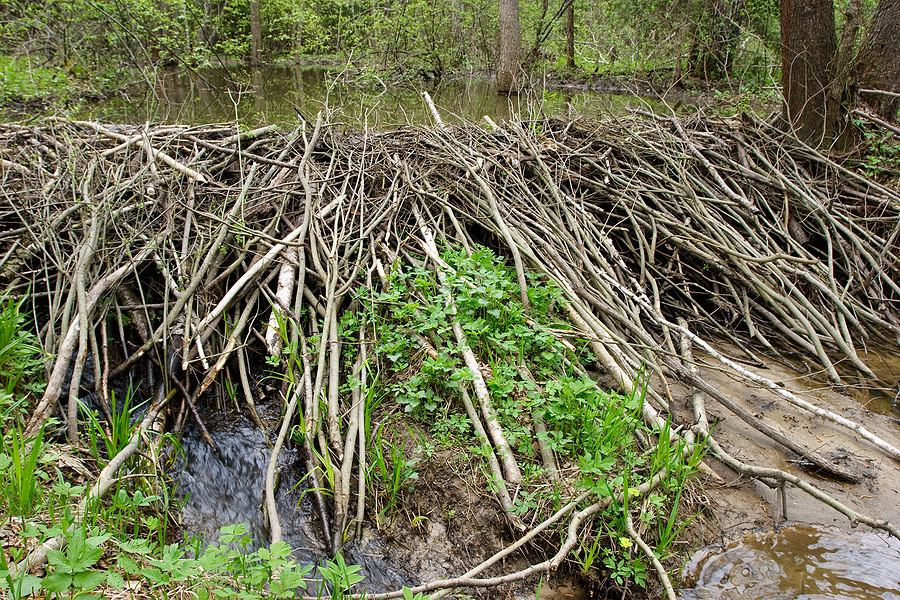
Beaver Dams: Why They Matter and Why They Cause Problems
Beavers don’t build dams out of spite. They build them for survival. A dam creates a deep-water pond that protects their lodge from predators and gives them a safe place to store food through the winter. The problem is, beavers don’t consider property lines, septic systems, or storm drains when choosing a location.
How Beaver Dams Affect Water Flow and Drainage
Once a dam is in place, water backs up behind it, and the surrounding land absorbs the overflow. This altered flow can saturate fields, flood low-lying yards, and push water into areas that were previously dry. Culverts are especially vulnerable. Beavers are drawn to them because the narrow opening does much of the damming work for them, and a blocked culvert can quickly turn into a washed-out road.
Common Property Damage from Beaver Activity
The most immediate concern is flooding, but it’s far from the only one. A rising water table can overwhelm septic drain fields, leading to expensive repairs and sanitation issues. Beavers also fell trees for both construction material and food, and prolonged flooding can drown root systems that were never meant to sit in water. Left unaddressed, a single dam can chip away at a property’s value and its usability over time.
Signs You Have a Beaver Dam Problem
Catching a beaver problem early makes it far easier to manage. Watch for:
- Water pooling in new areas, including yards, fields, or low points that were previously dry
- Chewed or felled trees near ponds, streams, or drainage ditches
- Structural stress, such as cracks in foundations or driveways caused by shifting, saturated soil
- Blocked culverts or ditches, often marked by sticks, mud, and debris packed tightly against the opening
If you notice any of these signs, it’s worth investigating before the situation grows into a larger, more expensive fix.
Legal and Ethical Considerations Before Taking Action
Before removing a dam or attempting to relocate a beaver, it’s essential to understand what Virginia law actually allows.
Do You Need a Permit to Remove a Dam?
In most cases, beaver dams themselves aren’t regulated by the Virginia Department of Wildlife Resources (DWR), so removal doesn’t require a DWR permit. That said, disturbing a wetland or stream through excavation or fill work can trigger a Virginia Water Protection (VWP) permit requirement through the Virginia Department of Environmental Quality (DEQ). For large, established dams, it’s worth checking with the DEQ or the U.S. Army Corps of Engineers before you start work.
Rules for Managing the Beavers Themselves
Removing a dam doesn’t solve the underlying problem if the beaver is still on your property. A few key rules apply in Virginia:
- Relocation is prohibited. Virginia Code does not allow live beavers to be moved to another location, largely to prevent the spread of disease and to avoid shifting the problem elsewhere.
- Lethal control is permitted for property damage. Landowners can address beavers causing damage to their land without needing a kill permit from the DWR, though local firearm and trapping ordinances still apply.
- Trapping seasons vary by locality. Arlington, Fairfax, Henrico, Loudoun, and Prince William counties allow continuous open trapping. Most other areas follow a regulated season running from December through February.
Liability to Keep in Mind
Releasing a large volume of pooled water all at once can send it rushing downstream, causing flooding or erosion on neighboring properties. This isn’t just an environmental concern, it’s a potential liability issue. Any major dam removal should be approached carefully, with attention to how the water will move once it’s released.
Professional Solutions for Dam-Related Disputes
When to Call Wildlife Experts
Some situations call for professional support. Consider bringing in a licensed wildlife control expert if:
- The dam is large, and releasing the water could flood downstream properties
- Trapping is necessary, since professionals know how to avoid non-target species and handle animals legally and humanely
- You’re installing a flow device, since incorrect sizing or placement can cause the system to fail
A qualified team can assess the dam’s impact, handle beaver removal and trapping in compliance with Virginia law, and recommend long-term solutions to prevent the problem from returning.
DIY Prevention Methods
For smaller-scale issues, several prevention methods can be handled without professional help:
- Tree wrapping: Protect valuable trees by wrapping the trunks in hardware cloth or heavy wire mesh, extending at least 30 inches, and ideally 4 feet, up the trunk.
- Flow devices: A pond leveler, sometimes called a “Clemson leveler,” is a pipe system installed through the dam. Because the intake sits underwater and upstream, beavers can’t detect the leak, which keeps water at a manageable level without triggering them to rebuild.
- Culvert protection: A trapezoidal fence, known as a “beaver deceiver,” placed around a culvert’s upstream opening encourages beavers to build farther away, reducing the risk of blockage.
- Habitat changes: Removing preferred food sources like willow, aspen, and sweetgum from the shoreline, and replacing them with less appealing species like pine, can make your property less attractive to beavers in the first place.
Routine monitoring makes a real difference here. Breaking up a small “starter dam” made of mud and a few sticks is far simpler than removing a fully established structure weeks later.
Resolving Neighbor Disputes Over Beaver Dams
Beaver dams rarely respect property lines, which means flooding on one lot often traces back to a dam built on or near another. Handling these situations well starts with communication.
Talk Before You Act
Reach out to affected neighbors as soon as you notice a problem. A shared understanding of the situation, and the water flow involved, makes it much easier to agree on next steps before frustration sets in.
Consider Splitting the Cost
Since a single dam can affect several properties at once, splitting the cost of a professional assessment or flow device installation is often more practical than tackling it alone. It also ensures the solution addresses the problem at its source, rather than shifting water onto someone else’s land.
Document Everything
Keep records of water levels, photos of damage, and any communication with neighbors or contractors. This documentation is valuable if the dispute escalates to an insurance claim or requires legal input down the line.
Frequently Asked Questions
How long does it take to remove a beaver dam?
Most beaver dam removal projects take anywhere from a few days to a week, depending on the size of the dam and the extent of the beaver activity on the property.
Can beavers return after relocation?
In Virginia, relocation isn’t an option, as state law prohibits moving live beavers to a new location. If a beaver is trapped and removed, another beaver may eventually move into the same territory if the habitat still offers food and water, which is why long-term prevention matters just as much as removal.
What is the cost of professional beaver dam removal?
Costs vary depending on the size of the property, the extent of the damage, and the removal method required. A licensed wildlife control company can provide an accurate estimate after assessing the site.
Are there seasonal restrictions on beaver management?
Yes. Trapping seasons differ by locality. Arlington, Fairfax, Henrico, Loudoun, and Prince William counties permit continuous open trapping, while most other parts of Virginia follow a regulated season from December through February.
Protecting Your Property, the Right Way
Beaver dams create a real tension between admiring nature’s engineering and protecting your land from its consequences. Whether you’re dealing with early signs of flooding or a fully established dam that’s already causing damage, understanding Virginia’s laws is the first step toward a solution that’s both effective and compliant.
For dam removal, trapping, and flow device installation, professional guidance takes the guesswork (and the legal risk) out of the process.
Facing a beaver dam problem on your property? Virginia Wildlife Pros offers expert beaver assessment and removal services throughout Richmond and the surrounding counties. Contact us today for a free estimate, or call 804-292-0156 to schedule service.
Related Posts:
How to Handle Beaver Damage to Your Richmond, VA Property
Virginia Beaver Dam Removal: Laws, Problems, and Solutions
8 Tips for Successful Beaver Management