Stumbling across a snake in your yard or home feels incredibly startling. While these reptiles play a vital role in our local ecosystem by keeping rodent populations in check, having them slither into your personal living space can cause genuine distress.
Snakes generally prefer to avoid human interaction. When they do end up on your property, they are usually just following a food source or looking for a safe place to regulate their body temperature. Knowing how to identify local species and discourage them from sticking around can save you a lot of panic.
This guide will walk you through the reasons these reptiles enter your property, how to identify the species local to central Virginia, and the safest ways to handle their presence.
Why Richmond Properties Attract Snakes
Richmond’s mix of urban, suburban, and heavily wooded areas creates a perfect environment for local wildlife. If you frequently spot snakes around your home, your property is likely providing them with their basic survival needs: food, water, and shelter.
Why Snakes Enter Properties
Snakes are driven by basic biological urges. Because they are ectothermic, meaning they cannot regulate their own body heat, they rely on their environment to stay warm or cool. During the peak heat of a Virginia summer, a snake might seek refuge in your cool, damp basement or crawlspace. On a crisp autumn morning, you might find one basking on your sunlit driveway or patio.
Food is the other major attractant. Snakes primarily feed on small rodents, amphibians, and large insects. If your home has a mouse issue, or if you keep bird seed outside that attracts rodents, snakes will naturally follow that food source right to your doorstep.
Common Snake Species in Richmond
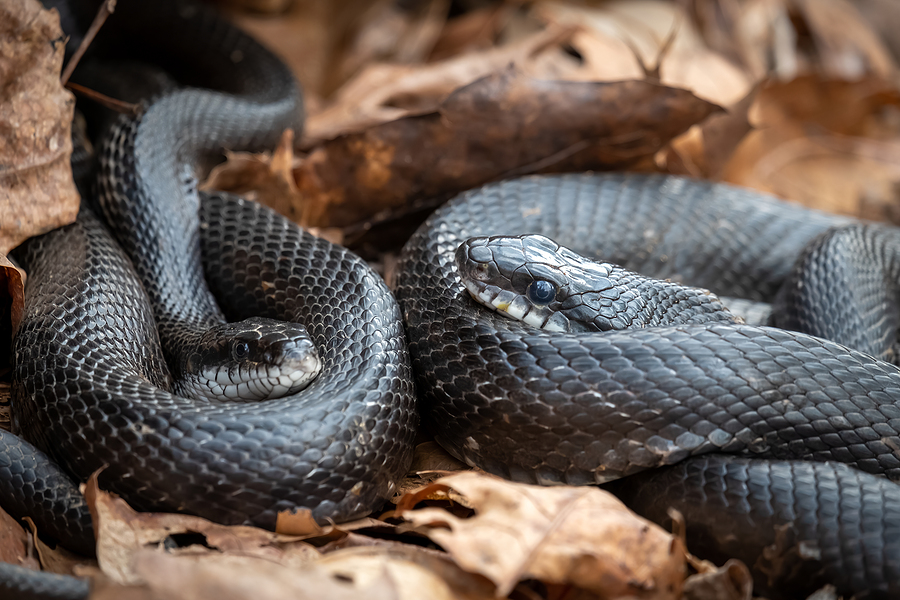
Virginia is home to dozens of snake species, but only a handful commonly interact with humans in the Richmond area. You are most likely to encounter the Eastern Ratsnake, formally known as the black rat snake. These are large, proficient climbers often found near barns, attics, and gardens searching for mice. You may also frequently see the Eastern Garter Snake and the Northern Watersnake, both of which are completely harmless to humans.
Snake Identification for Virginia Homeowners
A snake encounter is much less terrifying when you know exactly what you are looking at. Learning to identify the reptiles in your neighborhood helps you respond calmly and appropriately.
Venomous vs. Non-Venomous Snakes
The vast majority of snakes you will encounter in Richmond are non-venomous. Virginia only has three venomous snake species statewide. In the immediate Richmond area, the Eastern Copperhead is the only venomous species commonly found. The Timber Rattlesnake and the Northern Cottonmouth are restricted to specific mountainous or coastal regions and are rarely, if ever, seen in central Richmond.
Because non-venomous species like the Eastern Ratsnake or Northern Watersnake share similar coloring with the Copperhead, they are often needlessly killed out of fear.
Key Features to Look For
When trying to identify a snake from a safe distance, look at its pattern and body shape. The Eastern Copperhead features a highly distinct pattern of hourglass-shaped bands across its back. These bands are wider on the sides and narrow at the center of the spine. Copperheads also have a relatively heavy, thick body and a distinctively triangular head.
Non-venomous snakes typically have different patterns, such as stripes running the length of their body, solid dark colors, or blotchy spots. Keep your distance and avoid trying to examine a snake’s eyes or heat-sensing pits, as getting too close puts you at unnecessary risk.
Safe Snake Deterrence Methods
The most effective way to keep snakes away from your property is to make your yard less inviting. By cutting off their access to food and shelter, you encourage them to move along naturally.
Exclusion Techniques
If a snake wants to get into your house, it only needs a tiny opening. Inspect the exterior of your home for any cracks or gaps in the foundation. Seal all openings around utility pipes, vents, and cables with heavy-duty caulk or wire mesh. Ensure your doors have tight-fitting sweeps and that your window screens are fully intact. Keep your garage doors closed when not in active use.
Habitat Modification
Habitat modification is highly effective. Start by cleaning up your yard. Remove large rock piles, heavy brush, and stacked firewood from the immediate perimeter of your home. Keep your grass mowed short, as snakes avoid slithering through open, exposed areas where predators can easily spot them.
You should also take steps to eliminate their food sources. Keep pet food indoors, secure your trash in tightly sealed bins, and clean up spilled birdseed that might attract rodents.
Natural Repellents
You might have heard that applying sulfur, mothballs, or essential oils will keep snakes away. Extensive research from organizations like the USDA and Virginia Tech has shown that these chemical and natural repellents are generally ineffective. Furthermore, using mothballs outside is an off-label use that violates EPA regulations and introduces toxic chemicals into your soil. Focus your efforts on habitat modification and exclusion rather than wasting money on ineffective sprays.
When to Call for Professional Help
Sometimes, despite your best efforts at habitat modification, a snake manages to get inside your living space or refuses to leave your porch. Dealing with a trapped or defensive animal requires care and expertise.
Benefits of Professional Snake Removal
Under Virginia law, snakes are classified as nongame species and are legally protected. It is illegal to kill any snake in Virginia unless it poses an immediate, unavoidable threat to your health and safety.
Hiring a professional snake removal service ensures the animal is handled legally and humanely. Wildlife removal experts have the proper tools, protective gear, and training to safely capture and relocate the snake without putting you or the animal in harm’s way.
What to Expect from a Professional Service
A certified wildlife control operator will thoroughly inspect your property to locate the snake and identify its species. Once they safely capture the animal, they will transport it to an appropriate, legal relocation site. A high-quality professional will also inspect your home for entry points and offer specific recommendations to prevent future wildlife intrusions.
FAQ: Your Top Questions About Richmond Snakes
Is it legal to kill a snake in Virginia?
No. Snakes are protected under Virginia state law. It is illegal to kill them unless they pose an imminent threat to human safety.
What should I do if a snake is in my house?
Keep your distance and isolate the snake if possible. You can carefully place an overturned bucket over the snake to keep it contained, then immediately contact a wildlife professional for removal.
Do mothballs keep snakes away?
No. Scientific studies show that mothballs and sulfur-based repellents do not deter snakes. Using mothballs outdoors is also illegal and highly toxic to pets and the environment.
How do I know if a snake is venomous?
In Richmond, the Eastern Copperhead is the primary venomous concern. Look for its distinct hourglass-shaped bands and thick body. If you are unsure, treat the snake with caution and keep your distance.
Protect Your Home from Unwanted Wildlife
Snakes provide excellent pest control for the local environment, but they belong in the wild, not in your basement or backyard play area. By taking proactive steps to seal your home and tidy your yard, you can drastically reduce the chances of a surprise encounter.
For expert snake removal and wildlife control services you can trust in Richmond, Virginia, look no further. Contact us today to request a free, no-obligation estimate for your specific situation.
Related Post: Snake Safety in Virginia: How to Handle Wild Encounters