A squirrel darting across your yard might look harmless enough. But when one decides your attic, walls, or roof is the perfect place to build a nest, the consequences can be far more serious than a simple nuisance. From gnawed electrical wiring to contaminated insulation, squirrel nests pose real risks to your home’s structural integrity, your family’s health, and your peace of mind.
This post breaks down exactly what squirrel nests are, the problems they create, how to spot them early, and—most importantly—what to do about them.
What Are Squirrel Nests and Where Do They Form?
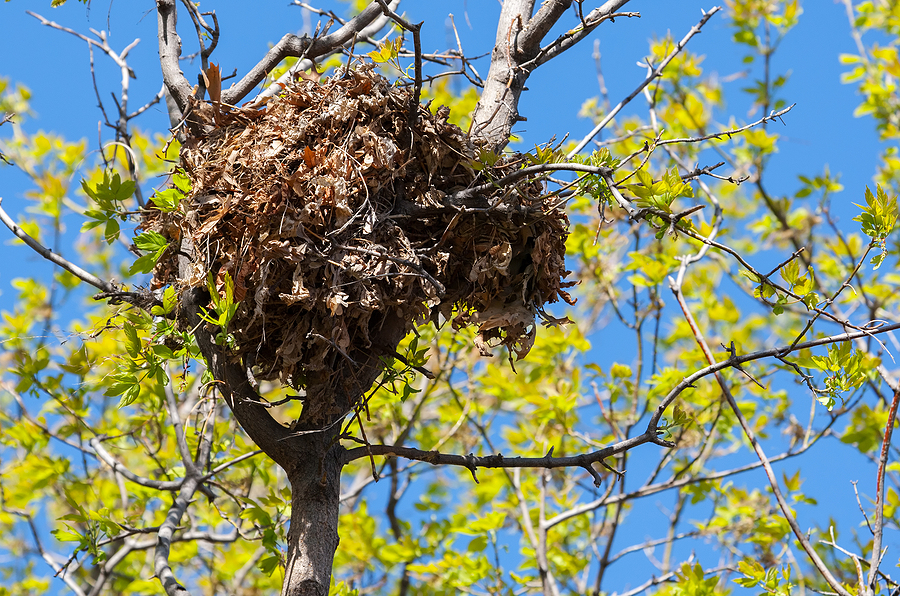
Squirrels build two main types of nests. The first is called a drey—a round, leafy structure typically built 20 feet or higher in a tree, near the trunk or at the fork of two strong branches. According to Mass Audubon, dreys are made from leafy branches with an inner layer of soft material like moss and pine needles. These nests can measure a foot or two wide and are most visible in winter when tree canopies thin out.
The second type is a cavity nest, where squirrels take shelter inside enclosed spaces: tree hollows, chimneys, wall voids, and—most problematically—attics. Gray squirrels don’t hibernate, so they remain active year-round and actively seek warm, sheltered spaces during colder months. When a tree hollow isn’t available, your home becomes the next best option.
Common entry points include:
- Roof soffits and fascia boards
- Unsecured attic vents
- Chimney openings without caps
- Gaps in siding or roofline
Squirrels can fit through a hole the size of a quarter—so even minor structural gaps are enough to let them in.
Common Problems Caused by Squirrel Nests
Structural Damage
Squirrels’ teeth grow continuously, which means they gnaw constantly to keep them from getting too long. Inside a home, that gnawing targets wooden beams, trusses, rafters, and roof shingles. Over time, this weakens the structural integrity of your home and creates entry points for water, which can lead to mold growth and costly repairs.
They also tear up insulation for nesting material, reducing your home’s energy efficiency and driving up heating and cooling costs.
Fire Hazards
One of the most serious risks posed by squirrel nests is fire. Squirrels frequently chew through electrical wiring, leaving bare, exposed wires that can spark inside your walls or attic. Making matters worse, the dry leaves, twigs, and debris that make up their nests are highly flammable—and positioned right next to those compromised wires. Attic fires are notoriously difficult to detect and extinguish, which is why early intervention matters so much.
Health and Sanitation Issues
Squirrel droppings and urine accumulate quickly, saturating insulation and drywall. Squirrel feces can carry diseases such as leptospirosis and salmonella. Their fur and hoarding behaviors also introduce allergens that can trigger asthma and other respiratory problems in household members.
Beyond that, squirrels often bring parasites with them. Fleas and ticks that hitchhike on squirrels can infest your home and spread to pets and family members.
Noise and Disturbances
If you’ve been hearing scratching, scurrying, or thumping from your attic or walls—especially in the early morning hours—squirrels are a likely culprit. Unlike many nocturnal pests, squirrels are diurnal (daytime) animals, so noise typically peaks at dawn and dusk. Over time, this persistent disruption can meaningfully affect sleep and daily comfort.
How to Identify Squirrel Nests on Your Property
Catching a squirrel infestation early is the key to minimizing damage. Here’s what to look for:
- Scratching or scurrying sounds in walls, ceilings, or the attic during daylight hours
- Visible dreys in trees close to your roofline—large, round, leaf-filled clumps near the trunk
- Chewed entry points along roof edges, soffits, vents, or siding
- Droppings in your attic, near insulation, or close to suspected entry points
- Frayed wiring or damaged insulation discovered during routine attic checks
- Staining on ceilings or upper walls, which can indicate squirrel urine seeping through drywall
Seasonal patterns also matter. Squirrel activity near homes typically increases in fall and winter, when natural shelter options become scarce.
Effective Solutions for Squirrel Nest Problems
Professional Removal and Exclusion
DIY trapping might seem straightforward, but it rarely addresses the full scope of the problem. Without locating and sealing all entry points, new squirrels will simply move into the vacated space. A professional wildlife removal service will conduct a thorough inspection, use humane trapping or one-way exclusion doors to remove the animals safely, seal all identified entry points, and clean up contaminated materials.
According to HomeAdvisor, professional squirrel removal can cost an average of $300, with most homeowners paying between $250 and $450. Attic infestations—among the most common and damaging—can run between $280 and $920, depending on infestation size and accessibility.
Humane methods are the standard for reputable companies. Trap-and-release approaches cost between $200 and $500, while one-way exclusion doors—which allow squirrels to exit but not re-enter—typically run $200 to $400.
Preventive Measures
Once squirrels are removed, prevention is the priority. Key steps include:
- Trimming tree branches so that no limbs overhang or touch your roof (squirrels use branches as launching pads)
- Installing chimney caps to block one of their most common access points
- Covering attic vents with heavy-gauge wire mesh
- Sealing gaps and cracks in siding, rooflines, and fascia boards
Habitat Modification
Reducing what draws squirrels to your property in the first place makes a meaningful difference. Remove or secure outdoor food sources, switch to squirrel-proof bird feeders, and clear fallen fruit or nuts from your yard regularly. Squirrels are persistent, but removing incentives around your home makes it a less attractive target.
Frequently Asked Questions
How long does it take to remove a squirrel nest?
Most professional squirrel removal jobs are resolved within a few days, though larger infestations may take longer depending on the number of animals and the complexity of the entry points involved.
Are squirrel removal methods humane?
Yes—reputable wildlife removal companies use humane trap-and-release methods or one-way exclusion doors that allow squirrels to leave without harm. Poisoning is strongly discouraged, as it poses risks to pets, children, and other wildlife, and can result in squirrels dying inside inaccessible areas of your home.
Can I remove a squirrel nest myself?
While minor deterrence steps—like trimming branches or installing vent covers—can be done independently, full removal is best left to professionals. Squirrels can bite when threatened and may carry diseases. Without sealing every entry point, DIY efforts often fail to resolve the infestation.
How much does professional squirrel removal cost?
According to HomeAdvisor, the average cost is $300, with a typical range of $250 to $450. A professional inspection costs $100 to $150 if no services are booked, though many companies waive this fee when removal is carried out.
Don’t Wait Until the Damage Adds Up
Squirrel nests rarely stay small problems for long. What starts as a scratching sound in the ceiling can quickly escalate into damaged wiring, contaminated insulation, and costly structural repairs. Acting at the first sign of a squirrel infestation is always the more affordable—and safer—choice.
If you’re dealing with squirrels in Richmond, Virginia or the surrounding areas, Virginia Wildlife Pros offers licensed, humane squirrel removal and exclusion services in the greater Richmond region. Contact us today to schedule an inspection and protect your home before the damage goes any further.
Related Posts:
Tiny Invaders: What to Do If You Find Baby Squirrels in the Attic
How to Get Rid of Pesky Squirrels Without Harming Them