TL;DR: Virginia is home to a rich variety of nocturnal wildlife, including raccoons, Virginia opossums, striped skunks, bats, and several owl species. Many of these animals have adapted surprisingly well to urban environments like Richmond. Understanding who’s active after dark—and why—can help you coexist safely with these creatures and protect your home.
Key Takeaways:
- Virginia has 17 documented bat species, and a single bat can consume up to 3,000 insects in one night
- Raccoons, opossums, and skunks are highly adaptable to urban and suburban settings
- Four owl species regularly nest in Virginia, playing a critical role in rodent control
- Rabies is endemic to Virginia—any exposure to a wild mammal should be reported to the Virginia Department of Health
- It is illegal in Virginia to trap and relocate wildlife to another area
- If you have a wildlife conflict, contact the Virginia Department of Wildlife Resources (DWR) helpline at 1-855-571-9003
Table of Contents:
- What Nocturnal Animals are Native to Virginia?
- Why are Raccoons and Opossums so Common in Richmond?
- The Role of Bats and Owls in Virginia’s Environment
- How to Identify Signs of Nocturnal Wildlife Near Your Home
- FAQ
- Quick Recap
- Local Wildlife Control in Richmond
What Nocturnal Animals are Native to Virginia?
Virginia is home to a diverse range of nocturnal species across its varied landscapes—from the rolling terrain of the Piedmont to the wetlands and forests of the Coastal Plain.
The most commonly encountered nocturnal mammals include:
- Virginia opossum (Didelphis virginiana) — North America’s only marsupial
- Raccoon (Procyon lotor) — a highly adaptable urban generalist
- Striped skunk (Mephitis mephitis) — nocturnal and best identified by smell
- Bats — 17 species documented in Virginia, according to the Virginia DWR
- Red and gray fox — crepuscular to nocturnal, more visible near urban edges
- Coyote — increasingly present across the state, including suburban areas
- Bobcat — more elusive, primarily nocturnal in forested habitats
- Northern flying squirrel — rarely seen, but active in wooded areas at night
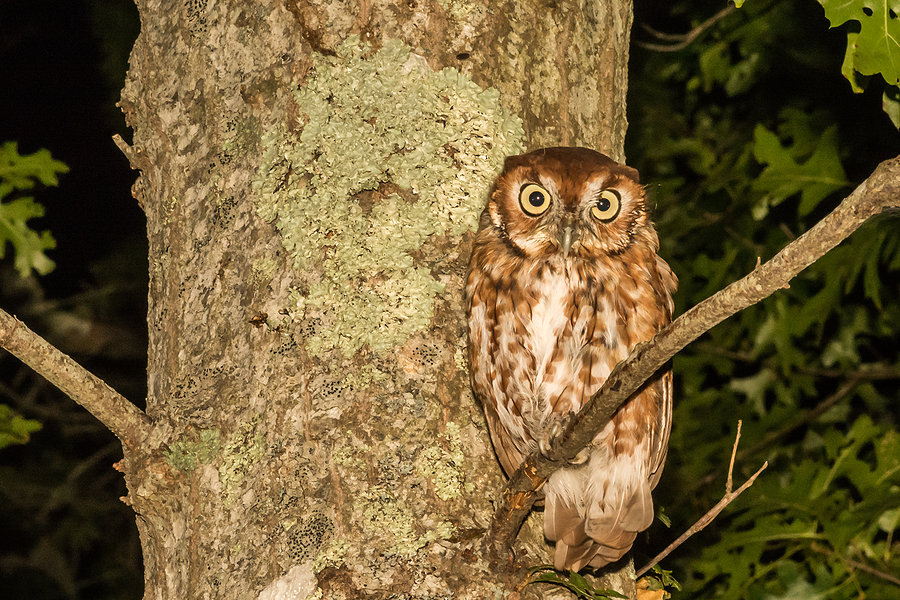
On the avian side, owls round out Virginia’s nighttime ecosystem. The eastern screech owl, barred owl, great horned owl, and barn owl all regularly nest in the state. Short-eared and northern saw-whet owls are also known to breed here, though they are less commonly observed.
Virginia’s ecological diversity—spanning forests, wetlands, agricultural land, and urban corridors—creates ideal conditions for a wide range of species to coexist, often within close proximity to human development.
Why are Raccoons and Opossums so Common in Richmond?
Raccoons and opossums thrive in Richmond and other urban Virginia areas because they are highly adaptable opportunists that exploit the food and shelter humans inadvertently provide. According to the Virginia DWR, raccoons are frequently attracted to urban properties by unsecured trash cans, pet food left outdoors, fruit trees, and accessible den sites such as under porches, in crawl spaces, and in outbuildings.
While they are primarily nocturnal, the DWR notes that seeing a raccoon during the day is not automatically a sign of rabies—daytime activity can increase during breeding season when animals need to forage longer to feed their young.
Opossums and skunks follow similar patterns. The DWR describes both as “nocturnal urbanized species” whose main conflicts with humans involve raiding trash cans and seeking den sites beneath structures. Like raccoons, daytime sightings are not necessarily cause for alarm.
The expansion of coyote populations across Virginia has also pushed foxes into closer urban proximity. Coyotes do not tolerate foxes and often exclude them from traditional rural habitats, according to the DWR—making suburban Richmond an increasingly common home for red and gray foxes.
The common thread across all these species is access to food and shelter. Remove those attractants, and most wildlife will move along on their own.
The Role of Bats and Owls in Virginia’s Environment
Bats and owls are two of Virginia’s most ecologically valuable nocturnal animals, yet they are often misunderstood or feared.
Bats: Virginia’s Natural Insecticide
All 17 bat species documented in Virginia are insectivores. The Virginia DWR describes them as “major predators of night-flying insects,” noting that some species can eat up to 3,000 insects in a single night. Think of a few bats circling your backyard at dusk, and you begin to appreciate how much pest control they provide without any intervention from you.
Bats navigate using echolocation—emitting high-frequency pulses that bounce off objects and return to them, allowing precise detection of distance, size, and direction of prey. It’s a remarkably sophisticated system that scientists have studied to develop sonar technology.
Unfortunately, bat populations across Virginia face serious threats from white-nose syndrome (WNS), a fungal disease that has spread to multiple counties across the Commonwealth. Protecting bat habitat and avoiding disturbance to roosts is increasingly important for their survival.
Owls: Precision Hunters of the Night
Virginia’s owls fill a critical ecological niche as controllers of rodent populations. Their primary prey includes mice, shrews, voles, and small birds. The great horned owl—found in forests, wetlands, and semi-open habitats across the state—has been dubbed the “tiger of the sky” by the DWR, capable of taking prey as large as skunks, rabbits, and even porcupines.
The barred owl, recognizable by its haunting “who cooks for you, who cooks for you-all” call, is one of the few owl species seen during daylight hours but is generally a nocturnal hunter. The eastern screech owl is among the most widespread in Virginia, camouflaging masterfully in tree hollows during the day.
Both bats and owls are best appreciated from a distance. Their presence near your home is a sign of a healthy local ecosystem.
How to Identify Signs of Nocturnal Wildlife Near Your Home {#signs}
You may never see them directly, but nocturnal animals leave behind clues. Here’s what to look for:
Tracks:
- Raccoon tracks resemble small handprints with five distinct fingers and are often found near water, mud, or soft soil
- Opossum tracks show five toes with the rear foot’s inner toe pointing outward—similar in appearance to a small hand
- Skunk tracks are small (about 1.5 inches), with five toes and visible claw marks
- Fox tracks are oval, with four toes and retractable claw marks often absent in soft ground
Droppings:
- Raccoon droppings are tubular, 2–3 inches long, and often contain berry seeds or insect parts; frequently deposited in communal latrine sites
- Opossum scat is similar in shape to a cat’s, often with a slight curl at one end
- Skunk droppings resemble those of a house cat and may contain insect exoskeletons or berry remnants
Sounds:
- A low, repetitive hooting after dark is typically a great horned or barred owl
- Rustling, chattering, or thumping sounds in your attic or crawl space at night may indicate a raccoon or opossum den
- A high-pitched screech in spring is often the eastern screech owl pairing up for mating season
- Scratching or squeaking in walls around dusk can indicate a bat colony
Other Signs:
- Overturned trash cans, scattered garbage, or knocked-over bird feeders are classic raccoon activity
- Digging in lawns overnight (particularly shallow, cone-shaped holes) can indicate skunk foraging for grubs
- Oily smear marks around small gaps in your home’s exterior may suggest regular entry points for wildlife
FAQ Section
Are nocturnal animals in Virginia dangerous?
Most are not predatory toward humans. According to the Virginia DWR, “the mere presence of a fox, raccoon, coyote, or bobcat on your property is not necessarily a cause for alarm.” However, rabies is endemic to Virginia and is transmissible between mammals. Any direct contact between humans or pets and a potentially rabid animal should be reported to the Virginia Department of Health immediately.
Are bats in Virginia protected?
Yes. Bats play a vital ecological role, and their populations are under threat from white-nose syndrome. Disturbing bat roosts, especially maternity colonies, is strongly discouraged. The Virginia DWR advises that bat exclusion from buildings should be performed before April or after August to avoid trapping young bats inside structures during the maternity season.
Is it legal to trap and relocate wildlife in Virginia?
No. It is illegal in Virginia to trap and relocate wildlife to another area. Nuisance animals that are trapped must be euthanized. This rule exists to prevent disease transmission and protect healthy wildlife populations. Contact a licensed nuisance wildlife trapper for assistance.
What should I do if a bat gets inside my home?
Do not attempt to handle the bat with bare hands. Open windows and doors leading outside, turn on the lights, and give the bat time to find its own way out. If the bat has potentially come into contact with a person or pet, contain it carefully—wearing leather gloves—and contact your local health department for guidance on rabies testing, per the Virginia Department of Health.
How do I stop nocturnal animals from coming onto my property?
We recommend several practical steps:
- Secure trash in metal containers with latching lids
- Remove pet food from outdoor areas
- Clear fallen fruit from around trees
- Seal openings under porches, decks, and outbuildings
- Trim overhanging tree limbs that provide roof access
Who do I contact if wildlife becomes a problem?
Call a licensed nuisance wildlife trapper in your area.
Quick Recap:
- Virginia is home to 17 documented bat species, all of which are insect-eaters that provide natural pest control
- Four owl species regularly nest in Virginia: the eastern screech owl, barred owl, great horned owl, and barn owl
- Raccoons, opossums, and skunks are highly adaptable to urban environments and are commonly found throughout Richmond
- Daytime sightings of normally nocturnal animals do not automatically indicate rabies
- Common signs of nocturnal wildlife include tracks, droppings, sounds, and disturbed trash or garden areas
- It is illegal to trap and relocate wildlife in Virginia
- Bat exclusion from buildings must occur before April or after August to protect maternity colonies
- Remove food attractants and seal entry points to discourage wildlife from denning near your home
Nocturnal Wildlife and Your Richmond Home
Sharing a neighborhood with Virginia’s nocturnal wildlife is largely manageable—and often beneficial. Bats quietly consume thousands of insects overhead while owls silently patrol for rodents. Raccoons and opossums clean up fallen food and organic waste. These animals fill important roles in the local ecosystem.
That said, problems arise when wildlife finds its way into your attic, crawl space, or walls. When that happens, professional intervention is the safest and most effective solution.
If you’re dealing with nocturnal wildlife at your Richmond, VA property, our team offers free estimates and affordable removal services. We handle everything from raccoon exclusion to bat colony management—safely, humanely, and in compliance with Virginia law. Contact us today to schedule your free estimate.
Related Post: World Animal Day: Uniting for Wildlife and Environmental Causes